
The Kaihōgyō: Marathon Monks of Mt. Hiei
The Kaihōgyō is one of the most brutal spiritual rituals ever created — but buried beneath this extreme practice is an insight about modern life we seem to have forgotten.

Zen teaches us to find enlightenment in the ordinary. It isn’t something we acquire; it’s a realization that nothing is missing from the present moment.
This realization is typically approached through sitting meditation (zazen), disciplined attention to ordinary activity, and the release of grasping.
The Tendai monks of Mount Hiei pursue this liberation through a very different form of practice.
Here, enlightenment is seen as something to be forged. Burning away the ego requires rigorous exertion, absolute discipline, and complete exhaustion of the physical body.
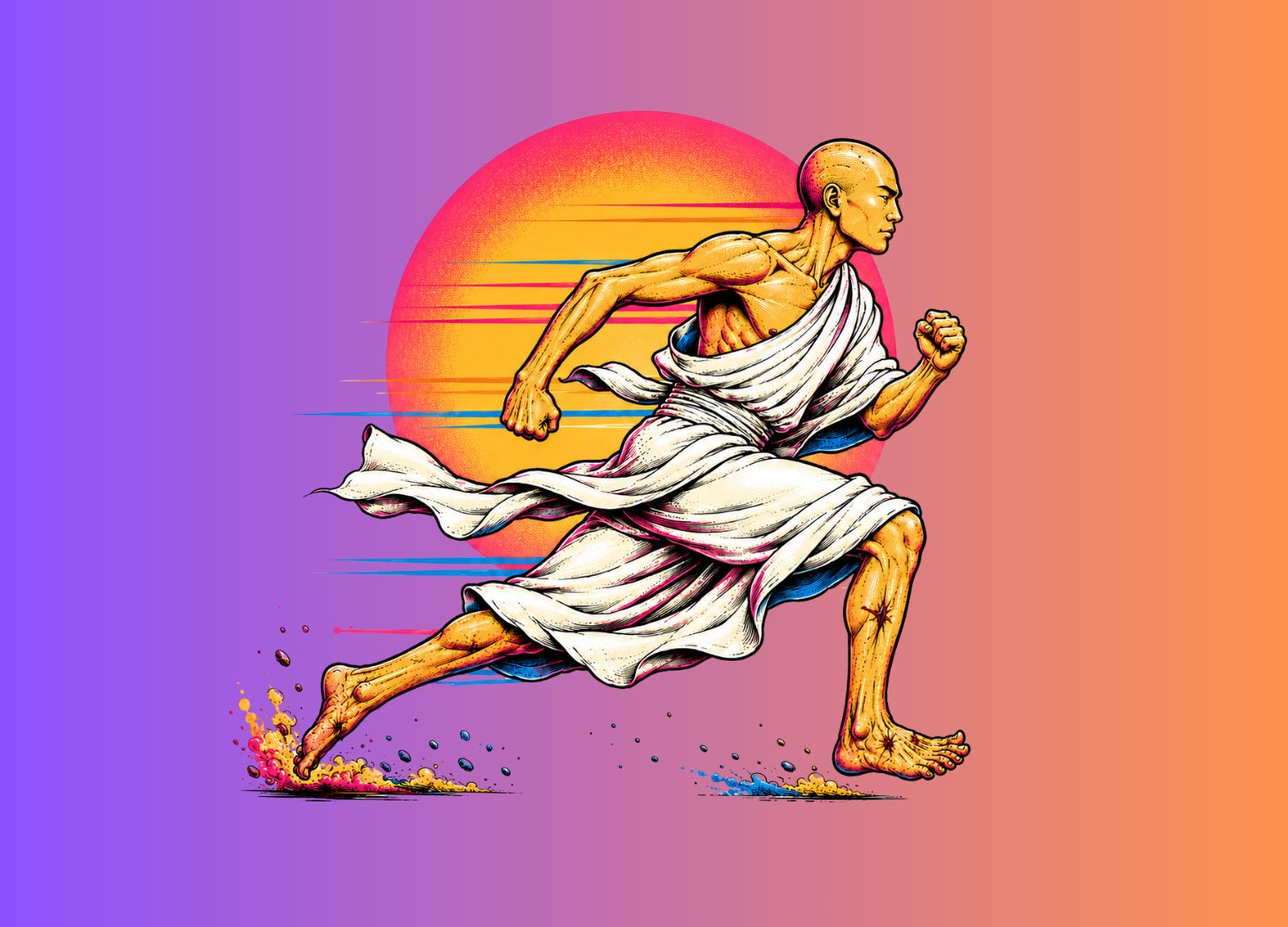
For over a thousand years, monks of the Tendai school living at Enryaku-ji monastery on Mount Hiei have engaged in a practice that can only be described as one of the most brutal spiritual ordeals ever invented.
It’s called the Kaihōgyō — a seven-year ascetic marathon that takes place in the mountains surrounding Kyoto.
It’s no ordinary marathon — those who complete the Kaihōgyō run roughly the equivalent of the Earth’s circumference by the time they’re finished. It requires extreme endurance, total devotion, and an almost unimaginable tolerance for suffering.
Since the late 1800s, only a few dozen monks have actually completed it.
Here’s how it works.
1000 Days on the Mountain
Despite the nickname, the marathon monks aren’t simply running laps around the mountain. The circuit is considered a sort of “moving pilgrimage.”
There are stops at temples, shrines, and other holy sites along the way to offer prayers and recite mantras.
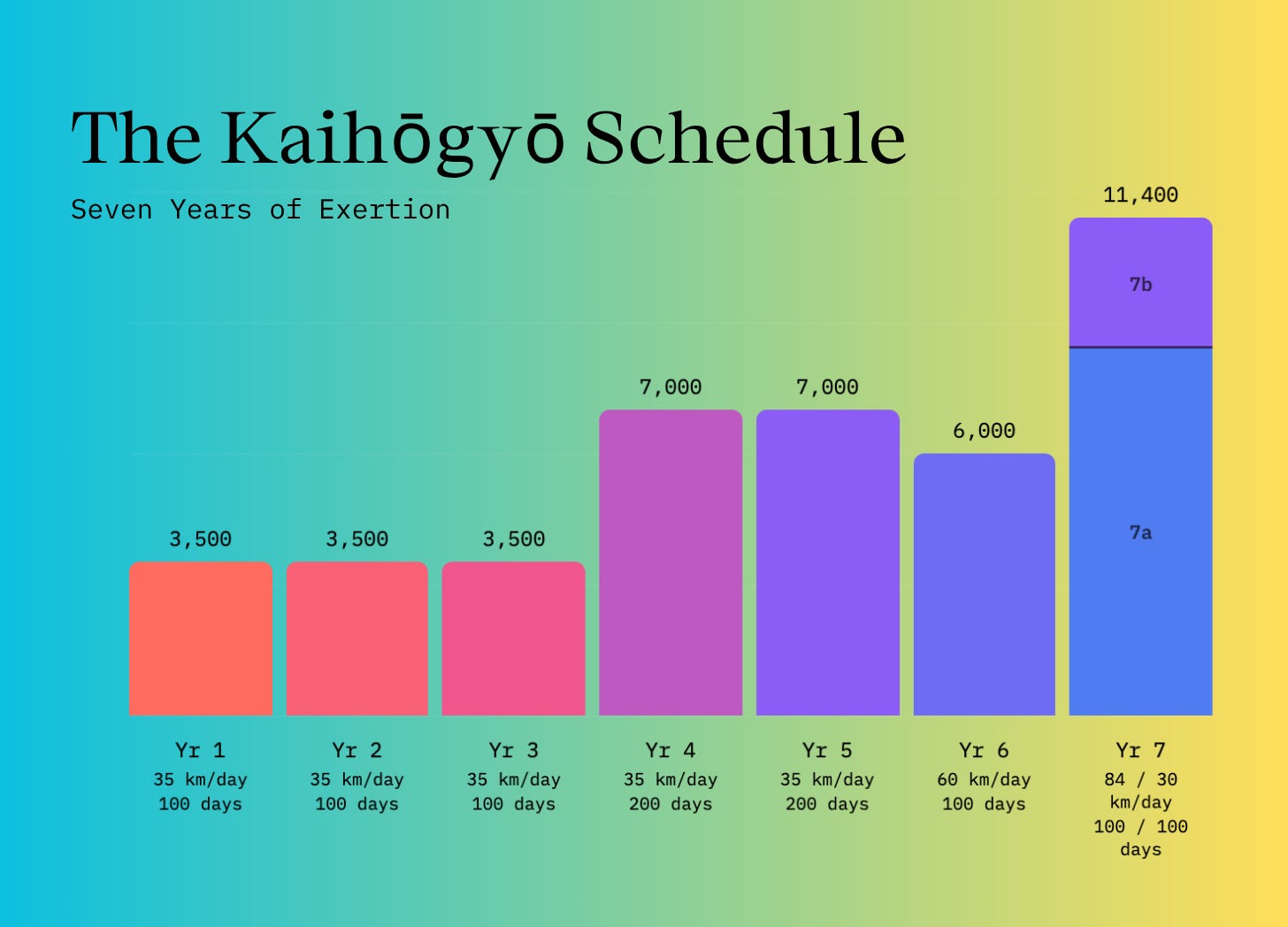
Each night for 100 consecutive nights, the monk runs a total of 30 km.
There are no breaks and no days off, and the monk is still expected to fulfill his monastic duties during the day. This means most practitioners use the night hours to run their circuit. They usually begin around midnight and run until morning.
Monks complete one cycle of 100 consecutive days per year (except in years four and five, when the cycle extends to 200 days) — the rest of the year is spent in normal monastic life.
The fifth year is the most dangerous. Monks must complete a ceremony known as the dōiri — a nine-day purification ritual in which the monk cannot eat, drink, or sleep.
The ritual is deliberately dangerous — designed to push the practitioner to the edge of death.
Once the dōiri is complete, the running begins again.
The Point of No Return
Let’s consider for a moment just how extreme this actually is...
Running 30 km in a single day is a lot, but it’s not completely absurd. A typical marathon is 42.2 kilometers — about 40% farther than the monks are expected to cover during the first stages of the Kaihōgyō.
But when you zoom out and consider that these monks are expected to do this every single day for over three months straight, you begin to understand just how genuinely insane this ritual actually is.
That’s not even the worst of it. By year seven, monks are running closer to 84 km in a single day — nearly two full marathons… per day.
There are no breaks and no rest days. They are not taking supplements to support their joints, electrolyte mixes to optimize hydration, or carefully engineered recovery protocols between runs.
They don’t have the newest carbon-plated, shock-absorbing running shoes either — instead, they’re given a pair of straw sandals known as waraji — footwear notorious for dissolving when exposed to rain and mud.
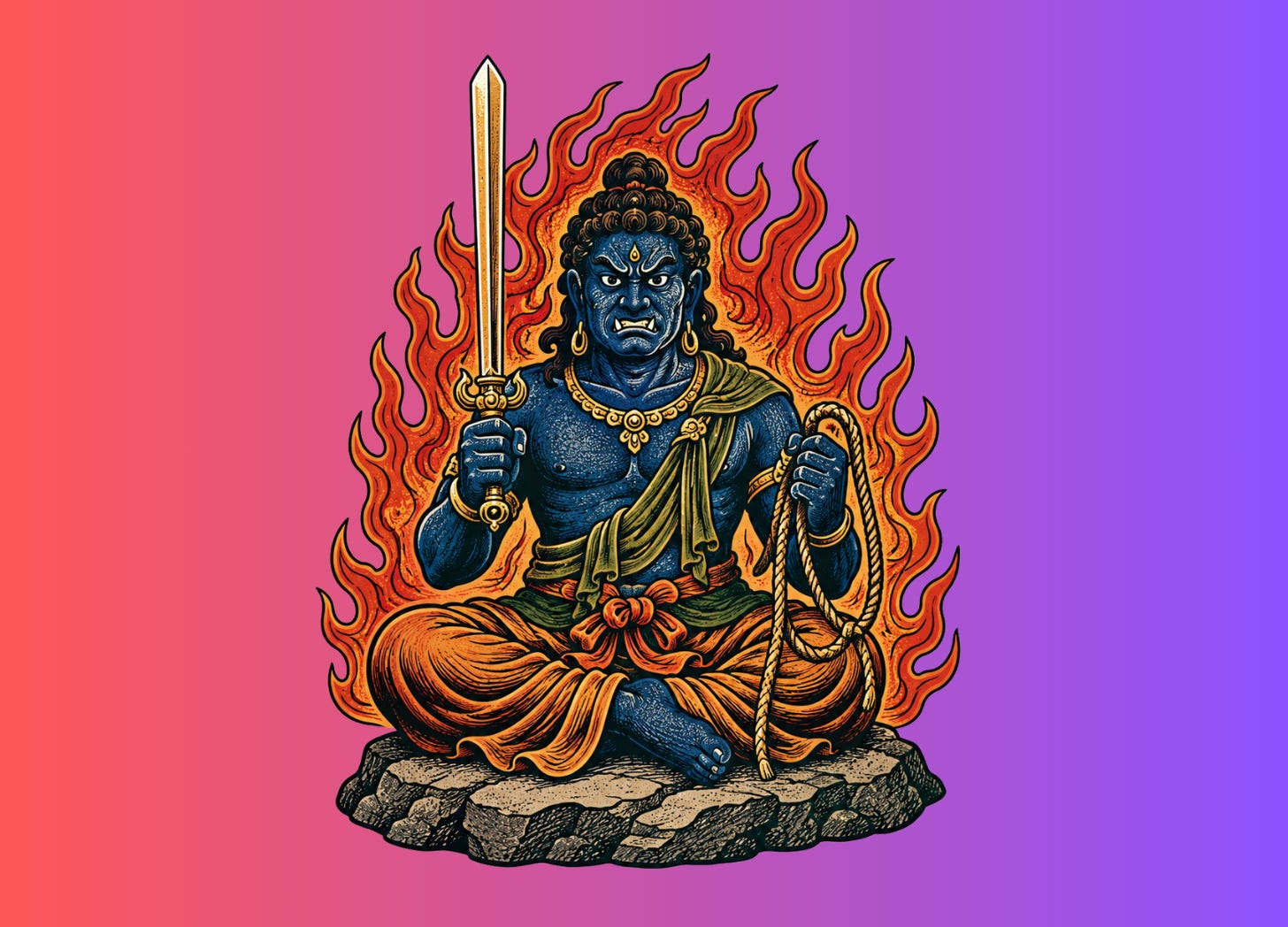
Monks undertaking the Kaihōgyō are permitted to carry just three items — a rope, a dagger, and a coin.
When a monk formally commits himself to the Kaihōgyō, failure is considered unacceptable. Traditionally, if he were to become unable to continue, he was expected to commit suicide. The rope and dagger were carried for this purpose. The coin is then used to pay for the passage across the Sanzu River — a mythological river that separates life and death.
Of course, this aspect of the ritual is no longer formally enforced, but the objects are still carried symbolically as reminders of the seriousness of undertaking the Kaihōgyō. Once the vow is made, quitting is simply not an option.
Symbolically, the monk enters the ritual as though he has already died.
The Schedule
The Kaihōgyō is undeniably one of the most extreme tests of the physical limits of the human body. By the time they’re done, they’ve run a combined 40,000 km (the Earth’s equatorial circumference is 40,075 km).
The schedule typically goes as follows:
Enlightenment Through Exhaustion
You’re probably wondering “Why would a spiritual tradition based on compassion and liberation create something like this at all? Isn’t running yourself to the edge of death the exact opposite of enlightenment?”
From a Zen perspective, perhaps it is. But the monks of Mount Hiei begin from a different premise — that the ego can be worn down through direct confrontation with suffering.
This contradiction begins to make more sense once you understand the role asceticism has historically played in Buddhist traditions.
Buddhism has never been exclusively about peace and serenity.
Throughout history, Buddhist practitioners have engaged in prolonged fasting, sleep deprivation, isolation, long pilgrimages, exposure to the elements, and other severe ascetic disciplines intended to weaken attachment to the physical body and confront the impermanence of the self.
Even Siddhartha Gautama — the historical Buddha himself — spent years practicing extreme asceticism before ultimately abandoning it in favor of what became known as the Middle Way.
The monks of Mount Hiei carry these old ascetic traditions forward.
Within the Kaihōgyō, enlightenment is pursued through relentless discipline and the deliberate abandonment of comfort.
The practice is designed to wear down the ordinary self that constantly seeks relief, distraction, and escape. Through repetition and exhaustion, the practitioner is forced to confront his fear, attachments, and suffering.
Attachment to the physical body may be one of the deepest obstacles to enlightenment. We can surrender possessions, status, and ordinary pleasures relatively easily — but loosening our attachment to the body itself is far more difficult.
The dōiri marks the turning point of the entire Kaihōgyō. The first 700 days are traditionally understood as self-benefitting practice — discipline undertaken in pursuit of the monk’s own awakening. After his symbolic death and rebirth during the dōiri, the final 300 days become others-benefitting practice. The monk returns to the road as a bodhisattva, completing the journey not only for himself, but for the liberation of others.
This distinction is important. The self is not broken down so that a tougher, more impressive individual can emerge. It’s broken down so that concern for the self no longer stands at the center of the practice.
The Discipline of Self-Erasure
You might be tempted to view the monks of Mount Hiei as superhuman endurance athletes — the ultimate expression of discipline, fitness, and mental toughness.
In Tendai Buddhism, monks who manage to complete this ritual are awarded the title Dai Ajari (“Great Master Ascetic”) and are revered almost like living saints.
But these monks are not athletes — they are ascetics.
That distinction matters because a practice like the Kaihōgyō is much more likely to permanently damage the body than improve it. Nothing about this ordeal is designed to make the practitioner healthier.
Years of repetitive strain, sleep deprivation, exhaustion, and exposure to the elements aren’t exactly the ingredients for a long, healthy life.
But the point isn’t about physical optimization or self-improvement. It’s about transcendence through exhaustion.
Discipline, in this context, isn’t a tool for improving the self — it’s a method for dissolving our attachment to it altogether.
A Life Beyond Comfort
It’s easy to look at the Kaihōgyō and see only madness.
But beneath the extremity lies an important insight modern culture has almost completely forgotten:
Our deepest attachments only reveal themselves in the absence of comfort.
Modern culture treats discomfort as a design flaw — something to optimize away, distract ourselves from, or escape entirely.
Even Zen recognizes the value of voluntarily stepping into discomfort — sitting through excruciating silence, allowing boredom to consume us, undertaking difficult physical effort without seeking immediate relief.
It’s not that suffering is inherently virtuous, but that a life built entirely around convenience, stimulation, and escape slowly disconnects us from the present moment.
You don’t have to become an ascetic and run 40,000 km to discover how much freedom we surrender in the pursuit of comfort.